Protecting Your Home from Wild Animals
Many people ask why more wild animals are being seen.
One of the main reasons is the continuous expansion of
commercial and residential developments. Most animals
have a natural migration pattern. With the rise of
construction in rural areas, migration routes and
natural habitats are disturbed. These animals adapt
themselves to their new surroundings, and start to
search through our neighborhoods.
While simple trapping and relocating of the animals
seems like quick relief to the problem, it really is
not. If you remove one animal that has staked out a
territory, another will simply move in. We believe that
education is the way to solve the problem.
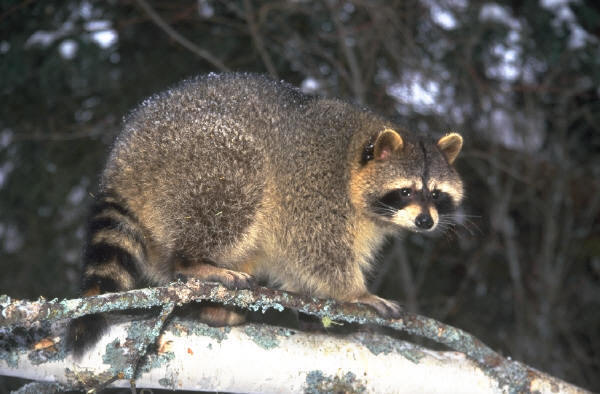 First,
look around the outside of your home. Look for any holes
or openings near foundations and steps that small
animals can crawl into. A hole the size of a tennis ball
is ample size for most small mammals, even raccoons.
Openings in porches and sheds or stacked woodpiles
provide the ideal refuge for animals. Once inside, many
animals nest and even raise offspring inside. Holes
should be covered up and gaps should be repaired and
sealed (but only AFTER the animal has been driven out.)
When replacing fencing around patios or steps, remember
to sink the boards at least 6 inches below the soil so
that animals cannot dig underneath.
First,
look around the outside of your home. Look for any holes
or openings near foundations and steps that small
animals can crawl into. A hole the size of a tennis ball
is ample size for most small mammals, even raccoons.
Openings in porches and sheds or stacked woodpiles
provide the ideal refuge for animals. Once inside, many
animals nest and even raise offspring inside. Holes
should be covered up and gaps should be repaired and
sealed (but only AFTER the animal has been driven out.)
When replacing fencing around patios or steps, remember
to sink the boards at least 6 inches below the soil so
that animals cannot dig underneath.
Raccoons, opossums and squirrels can easily scale the
side of a house and enter through chimneys, vents and
holes in awnings. These animals are strong and can rip
through most small holes, making them large enough to
enter. If your fireplace has not been used for a while,
or you may suspect that an animal has made entry to your
chimney, DO NOT start a fire in the fireplace. If an
animal or its nest is in the chimney, close the trap and
have a professional chimneysweep clear the chimney.
Starting a fire with an obstructed chimney can cause
smoke to fill the house, and the heat can fill the
chimney, creating a fire in the upper portion and even
into your attic.
Once inside attics, animals may make nests. We recommend
private trapping services in these situations.
Many people have bird feeders and gardens. Animals are
attracted to a garden that is not adequately fenced.
Bird feeders will cause other animals to come around
because of the seed that falls on the ground provides a
great food source. Garbage cans should be closed at all
times, even when empty. A weight should be placed on top
of the cans because animals can open the lids. Garbage
should not be put outside or by the curb until the
morning of pickup. Skunks and raccoons will attempt to
knock over the can and scavenge around inside,
scattering your trash.
 Our department will not remove a skunk that is in a
window well. The best way to remove a skunk or other
animal that is inside a window well is to place either a
tree branch or a board strong enough to support its
weight into the well and let the animal walk out when it
can. If a skunk is not able to leave under its own
powers, we will recommend a private trapping service to
you.
Our department will not remove a skunk that is in a
window well. The best way to remove a skunk or other
animal that is inside a window well is to place either a
tree branch or a board strong enough to support its
weight into the well and let the animal walk out when it
can. If a skunk is not able to leave under its own
powers, we will recommend a private trapping service to
you.
Any area that you may suspect that an animal is
frequenting should be of concern. When you suspect an
animal may be nesting around your residence, but are
unsure if animals are inside, simply sprinkle some
common flour around the hole and monitor it. If animal
tracks appear in the daytime, the animal is probably a
gopher, rabbit, chipmunk or other animal that is active
in the day. If the tracks appear at nighttime, it is
likely a raccoon, skunk or opossum.
Your goal outside should be to drive all wild animals
away from the house. Even if the animal is not causing
an immediate threat, nesting can cause other animals to
move into the area. Some animals will come looking for
smaller animals to feed on. Other animals find a home by
driving out the previous tenant. If your lawn has had
small areas dug up in scattered spots, you may have a
skunk or raccoon trying to dig up Grubs, or other small
insects and creatures. You should consider having a
landscape service care for your lawn to remove the
creatures and repair the lawn.
The best way to remove most wild animals outside the
house is to place rags that are soaked in ammonia or
mothballs around holes, garbage cans and any area you
feel trafficked by wild animals. This does not actually
hurt animals, but rather drive them away. Animals will
smell the ammonia or mothballs and think it is the scent
of another (larger) animal that may be "active" in the
area. They will then look for another feeding or nesting
ground. Be sure to pour the ammonia on rags and not into
the ground, as you do not want the chemical to seep into
the ground. Pouring into the ground can dissipate
quicker than when soaked into a rag and the chemical can
damage your grass or nearby plants. Do not use scented
ammonia, as this can defeat the purpose of trying to
drive the animals away.
If you believe a nocturnal animal has entered your home,
keep doors and entrances to this room blocked so that
the animal does not migrate through the house. Next,
leave a bright light on in the room and set up a small
radio. The bright light and noise from the radio will
usually cause the animal to move outside the residence.
Mothballs can be used inside the residence. Ammonia rags
are not recommended as the overwhelming odor of ammonia
can permeate to the rest of the house, causing breathing
problems for your family.
Never allow a family pet to attempt to drive the animal
away. Even the smallest scratch from a wild animal could
transfer diseases to your pet. Never attempt to confront
an animal that does not immediately run away when you
are present and making noise. Never, under any
circumstances attempt to poison, shoot or otherwise kill
or maim a wild animal. The Village of Spring Grove, the
Illinois Animal Anti-Cruelty Society, The State of
Illinois Conservation Police and the Department of
Natural Resources will prosecute fully anyone who
performs Cruelty to an Animal.
If an animal looks clearly sick or injured, we will
attempt to capture the animal, but only if it is showing
signs of illness or injury. If you continue having
problems with animals, please let us know and we will
attempt to assist you in any way that we can. We hope
this information can be of assistance to you in your
problems.
